
 by
by 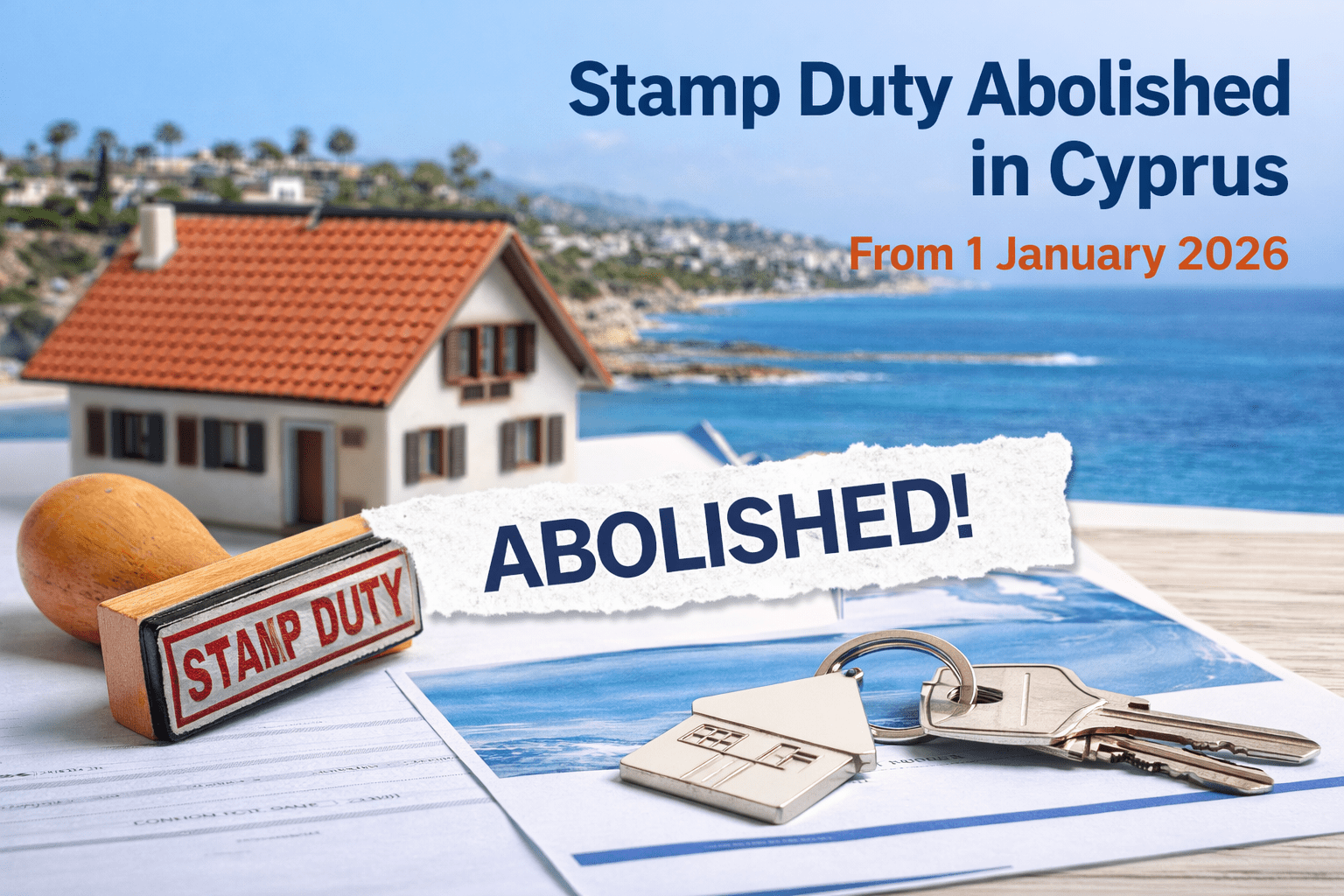
Stamp Duty Abolished in Cyprus from January 1, 2026 — What It Means for Property Buyers
A major change in Cyprus tax law came into effect on 1 January 2026 — the abolition of stamp duty. This is an important development for anyone considering buying property in Cyprus, including first-time buyers, holiday home purchasers, and international investors.
What Was Stamp Duty?
Until the end of 2025, Cyprus imposed stamp duty on a wide range of legal documents, including property sale contracts, leases, and other agreements. For real estate transactions, stamp duty was a cost calculated on the contract value — typically between 0.15% and 0.20% for most property sales — and was payable when a sale agreement was registered.
What Has Changed?
Under Law 239(I)/2025, the Cyprus Stamp Duty Laws (dating back to 1963) were repealed as of 1 January 2026. As a result:
-
Stamp duty no longer applies to property sale contracts or other legal documents signed on or after 1 January 2026.
-
This removes a longstanding transactional cost and a bureaucratic step from the property purchase process in Cyprus.
It’s important to note that documents signed before 31 December 2025 remain subject to the old stamp duty rules. Those contracts still need to be stamped and the appropriate duty paid under the previous legislation.
Why This Matters for Buyers
The abolition of stamp duty brings several practical benefits to today’s property market:
-
Lower Upfront Costs: Buyers no longer need to budget for stamp duty costs when signing property contracts, making property purchases more affordable.
-
Simpler Transactions: Removing this requirement streamlines the transactional process, reducing administrative burden and paperwork.
-
Increased Transparency: With fewer extra charges, buyers have greater clarity on the total costs associated with buying a home in Cyprus.
Other Property-Related Costs Still Apply
Although stamp duty has been abolished, other fees and taxes in the property purchase process remain in force, such as:
-
Property transfer fees payable to the Land Registry when the title deed is transferred.
-
Any applicable Value Added Tax (VAT) on new properties.
-
Local municipal and community charges.
At Cyprus101, We’re Here to Help
As estate agents based in Paphos, we are closely monitoring changes in Cyprus property law and taxation to help our clients make well-informed decisions. This latest reform is positive for buyers and investors alike and could provide additional savings and simplified procedures when purchasing your next property in Cyprus.
If you’d like to discuss how this change affects your plans or to explore properties that match your criteria, our team at Cyprus101 is always ready to assist — whether you’re looking to move here permanently, buy a holiday home, or invest in the Cyprus property market.


Join The Discussion